Overview
A portable oxygen concentrator (POC) is a medical device that extracts oxygen from ambient air and delivers it at a higher concentration (typically above 90%) to a patient through a nasal cannula. Unlike traditional oxygen cylinders, a POC produces oxygen continuously — there is no tank to refill and no risk of running out as long as the unit has power.
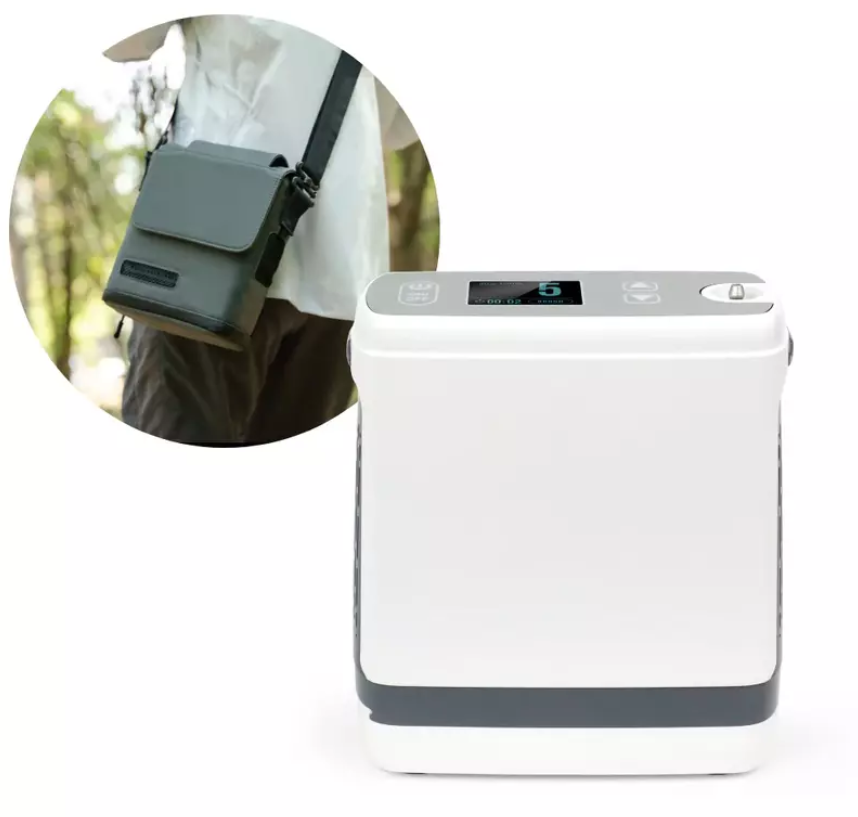
The technology was first developed for hospital use in the 1970s, then miniaturized for home use in the 1990s, and finally portable enough for true ambulatory use by the mid-2000s. Today's units like the SG weigh under 2 kg and run for hours on a battery the size of a smartphone. For patients with conditions like COPD, pulmonary fibrosis, or post-COVID hypoxemia, a POC transforms quality of life by enabling mobility outside the home.
This guide explains how a POC actually produces oxygen, the components inside, how it compares to oxygen cylinders, and the first steps to using one.
How It Works
Room air is roughly 21% oxygen and 78% nitrogen. A portable oxygen concentrator uses a process called Pressure Swing Adsorption (PSA) to separate nitrogen out of the air, leaving oxygen-enriched gas for the patient. Here is the cycle, simplified:
- Air intake. A small compressor draws ambient air through a particulate filter into the device.
- Compression. The compressor pressurizes the air and sends it into one of two sieve beds filled with a lithium molecular sieve material (zeolite). Under pressure, the zeolite preferentially binds nitrogen molecules while letting oxygen pass.
- Oxygen collection. The oxygen-rich stream is collected in a small reservoir, typically reaching 90–95% purity.
- Pulse-dose delivery. When the patient inhales, a pressure sensor opens a valve and releases a precisely timed bolus of oxygen through the cannula — synchronized with the breath for maximum efficiency.
- Nitrogen release. Meanwhile, the other sieve bed depressurizes and releases the captured nitrogen back into the air. The two beds alternate continuously, producing a steady supply of oxygen.
The SG performs this cycle thousands of times per minute, silently producing oxygen at 93% ± 3% concentration with a noise level below 48 dB.
Components
The Compressor and Sieve Beds
The mechanical heart of the device — these components do the actual work of separating oxygen from air. The sieve beds use CECA lithium molecular sieve, designed for thousands of pressure cycles before gradual degradation.
The Pulse-Dose Valve and Pressure Sensor
A fast valve and a sensitive pressure sensor detect the start of each inhalation. The valve opens for a fraction of a second to deliver a measured oxygen bolus exactly when it reaches the lungs. This is what makes pulse-dose technology so efficient — see our pulse-dose vs continuous flow guide for the full comparison.
The Battery
The SG uses a 6800 mAh lithium battery delivering 1.5–5.5 hours of operation depending on the flow setting. The battery charges in two hours from any standard AC outlet (100-240 V) or from the included 12-24 V car charger.
The Cannula and Tubing
A standard 7 mm nasal cannula connects to the oxygen outlet and delivers oxygen through soft prongs at the nostrils. See our cannula vs mask guide for delivery method options.
POC vs Cylinder
Traditional oxygen cylinders contain a fixed amount of compressed oxygen — when depleted, the cylinder must be refilled or replaced. They are heavy (typically 4–9 kg for a portable cylinder), require ongoing supply logistics, and pose a fire risk at higher pressures.
A POC produces oxygen from room air on demand — there is nothing to refill. It runs on electricity or battery, weighs under 2 kg in the SG's case, and presents a far lower fire risk since it does not store compressed gas. For ambulatory and travel use, the POC is the clear standard of care today.
Benefits of a POC
- True mobility. Patients can leave home, travel, and stay active without depending on cylinder deliveries.
- No refilling. As long as the device has power, it produces oxygen indefinitely.
- Lower fire risk. No stored compressed gas.
- FAA approved. Most POCs (including the SG specification class) are accepted on commercial flights with prior airline approval.
- Quiet operation. Modern units run below 50 dB — quieter than normal conversation.
Who Benefits
POCs are well-suited for ambulatory oxygen therapy — patients who need oxygen during activity but not necessarily 24/7 at the high flow rates a stationary concentrator provides. They are ideal for COPD patients in early-to-moderate stages, post-COVID recovery, pulmonary fibrosis with exertional desaturation, and patients who travel. For patients on high-flow continuous oxygen (above 3 L/min), a stationary concentrator or cylinder system may be required alongside the POC.
Getting Started
The path from suspecting hypoxemia to using a POC has four steps:
- Get a respiratory assessment. See a pulmonologist for SpO₂ measurement and pulmonary function testing. Read our oxygen consultation guide for clinics in Kuwait.
- Get a prescription. If oxygen is needed, the doctor will prescribe a specific flow level (1–5 for pulse-dose).
- Order the device. Contact us via WhatsApp to order the SG. We deliver free across Kuwait within 24 hours.
- Set up and learn. Read our tips for new users guide for first-day setup and battery management.