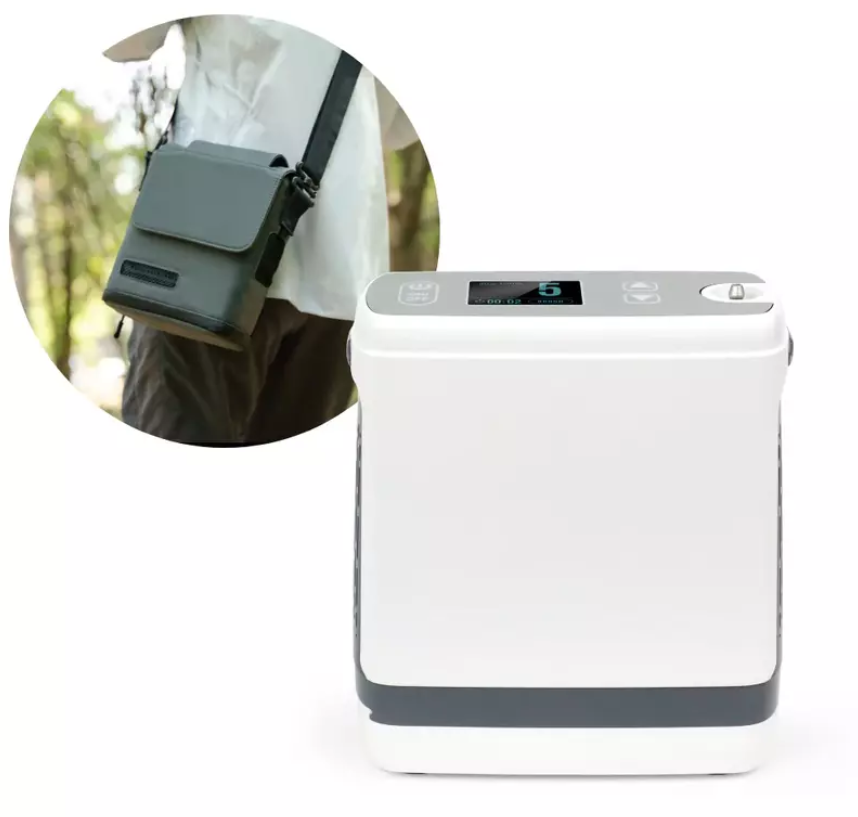
Overview
Starting oxygen therapy with a portable concentrator is a major adjustment. Most new users adapt within 3 to 7 days. This guide walks through the first day of use, how to manage the battery for all-day mobility, what to know before flying, in-car use, and the fire-safety habits that become second nature.
Your First Day
Set up the SG at home before going out anywhere:
- Charge the battery fully overnight before first use.
- Attach the nasal cannula to the oxygen outlet and place the prongs in your nostrils, looping the tubing over your ears.
- Power on and set the prescribed level (1 to 5). Listen for the pulse-dose click on inhalation.
- Measure your SpO₂ with a fingertip oximeter to verify you are at or above 90%. If not, contact your doctor — never increase the setting on your own.
- Use it sitting quietly for the first hour to get used to the cannula and the gentle pulse on each breath.
The Adjustment Period
During the first week, you may notice the cannula feels a little odd, the pulse-dose click is unfamiliar, or your nose feels a bit dry. These are normal and fade quickly. Tips for the adjustment:
- Increase wearing time gradually — start with 1-hour sessions and build up.
- Use a saline nasal spray morning and evening to prevent dryness.
- Keep a SpO₂ log during the first week to confirm the setting works.
- Replace the cannula after the first week even if it looks fine.
Battery Management
The 6800 mAh battery in the SG runs 1.5–5.5 hours depending on the flow setting. To get the most from it:
- Charge every night. Make it a habit so you never start a day at low battery.
- Plan trips. For outings longer than 3 hours at settings 3–5, bring the AC charger and plug in at a café or restaurant.
- Use the car charger on the drive there and back to top up.
- Carry a spare cannula in case the primary one kinks or breaks.
- Watch the battery indicator on the LCD display. Below 20%, switch to AC power as soon as practical.
Air Travel
Portable oxygen concentrators are generally accepted on commercial flights, but each airline has its own approval process. Steps to take before your trip:
- Notify the airline at least 48 hours before the flight. Some airlines require a medical clearance form filled out by your doctor.
- Carry battery for 150% of flight duration. For a 4-hour flight, you need 6 hours of battery — usually meaning a spare battery for medium-haul trips.
- Bring a medical letter from your pulmonologist confirming your need for oxygen during flight.
- Verify the device is FAA-approved. The SG SG specification class is generally accepted, but airline-specific approval is required for each carrier.
- Reserve a window or aisle seat near a power outlet if available — useful for plug-in operation on longer flights.
In-Car Use
The included 12-24 V car charger lets you use the device or charge the battery while driving. Place the device on the passenger seat or footwell with good ventilation — never inside a closed bag or under a blanket. Secure it with a seat belt strap so it does not slide during sudden stops. Never smoke in the car while the device is operating.
Fire Safety Precautions
Oxygen accelerates burning. The patient and the device must be kept away from:
- Cigarettes, vapes, shisha, and any open flame (3 m minimum).
- Gas stoves, fireplaces, candles, lighters.
- Oil-based products around the face (petroleum jelly, oily lip balms).
- Frayed electrical wires or sparking outlets.
For full safety guidance, see the side effects guide.
Troubleshooting Common Issues
- Device won't turn on. Check the battery charge. If fully charged but still off, try the AC adapter. If still off, contact SG Kuwait.
- No pulse-dose click on inhalation. Confirm the cannula is connected to the right outlet and not pinched. Try breathing through the nose more deliberately.
- Low SpO₂ readings. Verify the prescribed setting and contact your pulmonologist if it persists.
- Battery drains too quickly. Note the runtime and call us — battery replacement may be needed under the 2-year warranty.
- Alarm tones. Check the LCD for an error code and consult the user manual or contact us via WhatsApp.
For routine maintenance, see the maintenance guide. For any unclear issue, contact us via WhatsApp — support is available 24/7.