Overview
Oxygen can be delivered to the patient through several different interfaces, each suited to a specific clinical situation and flow range. The most common is the nasal cannula — a soft tube with two small prongs that sit just inside the nostrils. Higher flows or critical care situations may require an oxygen mask. This guide explains the available delivery methods and which is appropriate for portable use with the SG.
Oxygen Delivery Methods
There are four common oxygen delivery devices used in clinical practice: nasal cannula, simple face mask, Venturi mask, and non-rebreather mask. They differ by oxygen concentration delivered (FiO₂), maximum flow rate accepted, and how invasive they feel.
Nasal Cannula
A nasal cannula is the standard delivery method for home and portable oxygen therapy. It is a lightweight, flexible tube that loops over the ears and rests under the nose, with two small prongs (about 1 cm long) that sit just inside the nostrils. Oxygen flows continuously or in pulses through these prongs into the nasal passages, then to the lungs.
- Flow range: 1–6 L/min continuous, or pulse-dose settings 1–5 (SG)
- FiO₂ delivered: approximately 24–44% (depends on flow and breathing pattern)
- Advantages: Comfortable for long-term wear, lets you eat, drink, and talk normally
- Disadvantages: Not suitable for very high oxygen needs, can cause nasal dryness over time
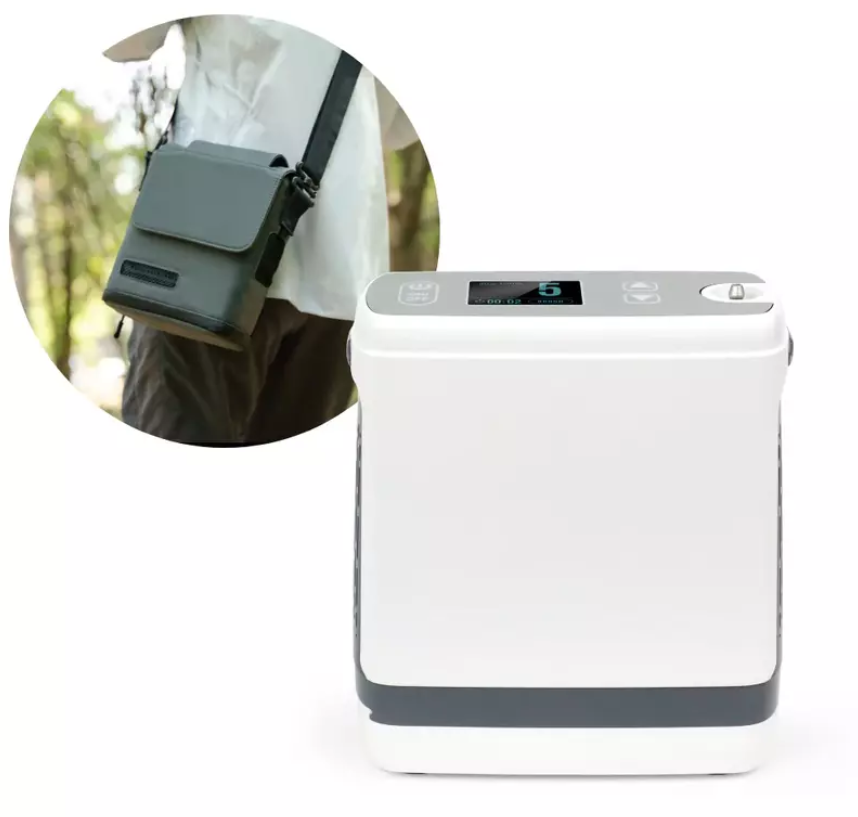
The SG includes a standard 7mm nasal cannula in the package, with a 2-meter tube length suitable for sitting and walking with the device on a shoulder strap.
Simple Oxygen Mask
A simple face mask covers the nose and mouth and connects to an oxygen source via tubing. It is used when higher oxygen concentrations are needed than a cannula can provide.
- Flow range: 5–10 L/min
- FiO₂ delivered: approximately 40–60%
- Used in: Hospital settings, acute care, post-anesthesia recovery
Simple masks are not used with portable concentrators because the required flow rates exceed POC output capacity.
Venturi Mask
A Venturi mask uses color-coded jet adapters to deliver a precisely controlled FiO₂ regardless of the patient's breathing pattern. It is used in hospitals when an exact oxygen concentration is required — particularly for COPD patients with CO₂ retention, where giving too much oxygen can be dangerous.
- FiO₂ delivered: 24%, 28%, 31%, 35%, 40%, or 60% (color-coded)
- Used in: Hospital COPD management, controlled-FiO₂ situations
Venturi masks are hospital-only devices and are not used at home with portable concentrators.
Non-Rebreather Mask
A non-rebreather mask has a reservoir bag and one-way valves that deliver very high oxygen concentrations (up to 95% FiO₂). It is used in emergency situations such as severe trauma, carbon monoxide poisoning, or acute respiratory distress.
- Flow range: 10–15 L/min
- FiO₂ delivered: 80–95%
- Used in: Emergency rooms, critical care
Like simple and Venturi masks, non-rebreathers require high continuous flow that exceeds what portable concentrators provide.
Flow Levels
For pulse-dose POCs like the SG, the pulmonologist prescribes a setting (1 to 5) rather than a continuous flow rate. Each setting corresponds to a defined bolus volume per breath. The appropriate setting maintains SpO₂ at or above 90% during the activity the patient performs (walking, climbing stairs, daily tasks). Confirm SpO₂ during the prescribed setting using a fingertip oximeter — your doctor will verify this during the assessment.
Fitting Guide
To wear the nasal cannula correctly: position the two prongs curving downward into the nostrils, loop the tubing over your ears like glasses arms, and slide the small adjuster up under your chin to keep the cannula secure. The prongs should sit comfortably — not pressed hard into the nostrils. If you feel pressure or irritation, adjust the loop tension or replace the cannula.
For setup and battery management tips, see our new user tips guide. For solving issues like nasal dryness from cannula use, see the side effects guide.