Overview
Oxygen concentrators deliver oxygen in one of two ways: as a steady stream that flows whether you are breathing in or not (continuous flow), or as precisely timed bursts that release only when you inhale (pulse-dose). The SG uses pulse-dose technology, which is the standard for portable units. This guide explains the difference and helps you understand which mode your prescription requires.
What is Pulse-Dose
A pulse-dose system uses a pressure sensor to detect the start of each inhalation. The moment it senses you breathing in, a valve opens and releases a precise volume of oxygen — the dose — which travels through the cannula directly into your lungs. The valve closes again before you exhale. This synchronization means the oxygen is delivered exactly when it can be used, and nothing is wasted during exhalation.
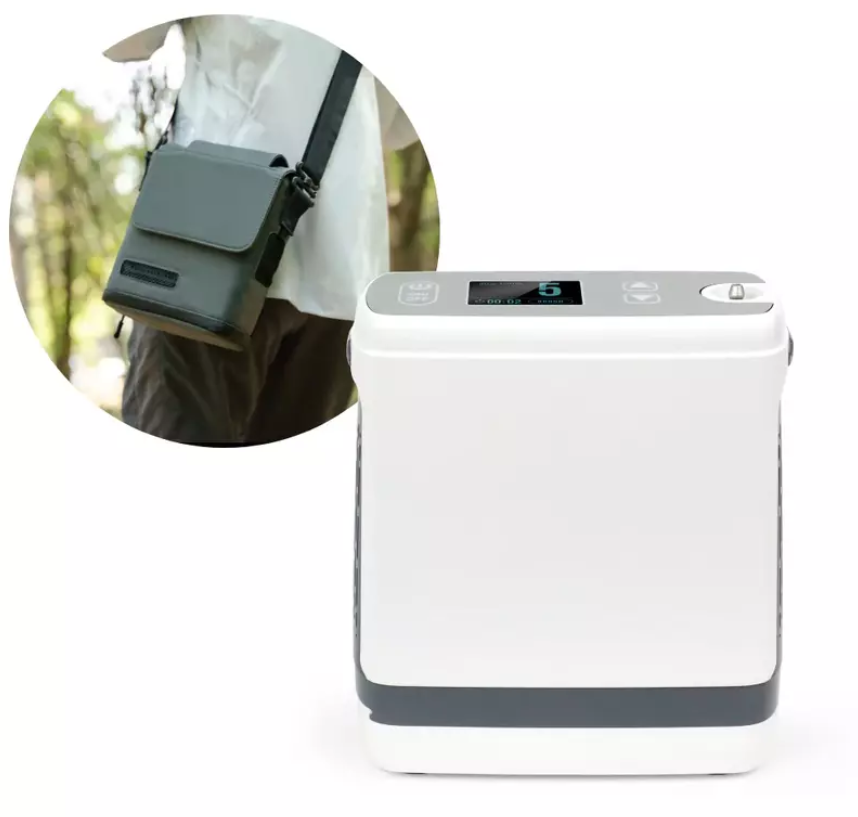
On the SG, five pulse settings (1 through 5) deliver increasing oxygen volumes per breath, up to 1000 ml/min at setting 5. Your pulmonologist prescribes the setting based on your SpO₂ readings during a respiratory assessment.
What is Continuous Flow
A continuous-flow concentrator delivers a steady stream of oxygen measured in liters per minute (L/min) — typically 1 to 5 L/min for home units. The flow does not stop when you exhale or pause between breaths, so a meaningful portion of the produced oxygen escapes into the room. Continuous flow is the original mode of oxygen delivery and is still required for some clinical situations.
Key Differences
- Efficiency. Pulse-dose uses oxygen only on inhalation, roughly doubling utilization efficiency.
- Battery life. Pulse-dose units run much longer on a battery — 1.5 to 5.5 hours for the SG versus 30 minutes to 2 hours for typical portable continuous-flow units.
- Portability. Pulse-dose units are smaller and lighter, making them practical for ambulatory use. Continuous-flow POCs are typically heavier and bulkier.
- Sleep use. Continuous flow is generally preferred during sleep because pulse-dose synchronization can be unreliable with shallow nighttime breathing. Confirm with your doctor.
- Mouth breathers. Pulse-dose requires nasal breathing to detect inhalation. Patients who mouth-breathe at rest may need continuous flow.
Comparison Table
| Feature | Pulse-Dose | Continuous Flow |
|---|---|---|
| Delivery | Synchronized with inhalation | Steady stream all the time |
| Measurement unit | Settings 1–5 | Liters per minute (L/min) |
| Battery efficiency | High (1.5–5.5 hrs) | Lower (typically < 2 hrs) |
| Weight | Light (~2 kg) | Heavier (4–8 kg portable) |
| Sleep use | Limited — check with doctor | Preferred |
| Best for | Ambulatory daytime use, travel | High-flow needs, sleep, hospitals |
Which is Right for You
For most patients with COPD, post-COVID hypoxemia, or pulmonary fibrosis who need oxygen during activity, a pulse-dose POC like the SG is the right choice. It provides the mobility and battery life that make ambulatory therapy practical. Patients who need continuous high-flow oxygen (above 3 L/min) or 24/7 oxygen at rest typically require a stationary continuous-flow concentrator at home alongside a portable unit for outings.
Always follow your pulmonologist's prescription. If unsure whether pulse-dose meets your needs, ask the doctor to confirm SpO₂ measurements at the prescribed pulse setting using a fingertip oximeter before relying on it.
Why SG Uses Pulse-Dose
The SG is engineered for ambulatory use — the patients most likely to benefit from this device are walking, traveling, and maintaining active lifestyles. Pulse-dose is the right delivery method for this use case because it maximizes battery life while providing clinically effective oxygen saturation during activity. The unit's five-setting range covers low to moderate oxygen needs (up to 1000 ml/min at setting 5), making it suitable for the majority of COPD, pulmonary fibrosis, and post-COVID patients in Kuwait who are prescribed ambulatory oxygen therapy.
To order, see the SG product page or contact us via WhatsApp.