Overview
Pulse oximetry is the fastest, simplest, and most widely used screening tool for low blood oxygen (hypoxemia). A small clip placed on the fingertip can tell you in seconds whether your oxygen saturation is in the normal range. This guide explains how pulse oximetry works, what the numbers mean, how to use a home oximeter correctly, and where to get a professional respiratory assessment in Kuwait.
What is Pulse Oximetry
A pulse oximeter shines two beams of light (red and infrared) through a fingertip. Hemoglobin in the blood absorbs the two wavelengths differently depending on whether it is carrying oxygen or not. The device's sensor measures the absorption and calculates the percentage of hemoglobin that is saturated with oxygen — this is the SpO₂ reading. It also measures heart rate from the pulsation of blood flow.
Home fingertip oximeters are inexpensive (typically 5–15 KWD in Kuwait) and provide reasonably accurate readings under good conditions. They are not substitutes for a clinical assessment but are excellent for monitoring trends and confirming that prescribed oxygen therapy is working.
Normal & Low Values
| SpO₂ Range | Interpretation |
|---|---|
| 95–100% | Normal for a healthy adult |
| 91–94% | Mild hypoxemia — consult a doctor |
| 86–90% | Moderate hypoxemia — needs evaluation |
| ≤ 85% | Severe hypoxemia — seek immediate medical attention |
Long-term oxygen therapy is generally indicated when SpO₂ stays at or below 88% at rest, or drops below 88% during routine activities such as walking. The decision is made by a pulmonologist based on multiple measurements over time, not a single reading.
How to Use Correctly
For an accurate reading at home:
- Warm hands. Cold fingers reduce blood flow and cause inaccurate readings. Rub your hands together for 30 seconds if they are cold.
- Remove nail polish. Dark polish (especially black, blue, or green) blocks the light beams and can give falsely low readings.
- Sit still. Movement disrupts the sensor. Sit quietly for 1 minute before reading.
- Place the clip on the middle or index finger with the screen facing up. Wait 10–15 seconds for the reading to stabilize.
- Record the reading along with the date, time, and what you were doing (resting, after walking, etc.). Trends are more useful than single numbers.
6-Minute Walk Test
The 6-minute walk test is the gold-standard assessment for exertional hypoxemia. Performed in a clinic, the patient walks at their own pace for 6 minutes on a flat surface while SpO₂ and heart rate are monitored continuously. A drop in SpO₂ below 88% during the test confirms that oxygen therapy is needed during activity.
You can perform a simplified version at home: measure SpO₂ at rest, then walk briskly for 6 minutes (or until you feel significantly short of breath), and measure again immediately after. A drop of 4 percentage points or more, or any reading below 90% during exertion, warrants a professional assessment.
When to Seek Medical Help
See a pulmonologist promptly if any of the following are true: resting SpO₂ consistently below 92% over multiple readings, SpO₂ drops below 90% during routine activity, unexplained shortness of breath, morning headaches, bluish lips or fingertips, or chronic fatigue out of proportion to your activity level. Single low readings can occur from technique errors — but consistent low readings warrant clinical evaluation.
Pulmonology Clinics in Kuwait
A respiratory assessment in Kuwait can be performed at:
- Chest Diseases Hospital (Sabhan) — the main government referral center for pulmonology in Kuwait, with full pulmonary function lab and 6-minute walk test capability.
- Mubarak Al-Kabeer Hospital (Jabriya) — government pulmonology department.
- Al-Amiri Hospital (Kuwait City) — government pulmonology department.
- Other government hospitals — Al-Sabah, Al-Farwaniya, Al-Adan, Al-Jahra hospitals have pulmonology services with referral pathways.
- New Mowasat Hospital (Salmiya) — private clinic with pulmonology services and flexible appointments.
For the full list with addresses and phone numbers, see the oxygen consultation page.
After Assessment
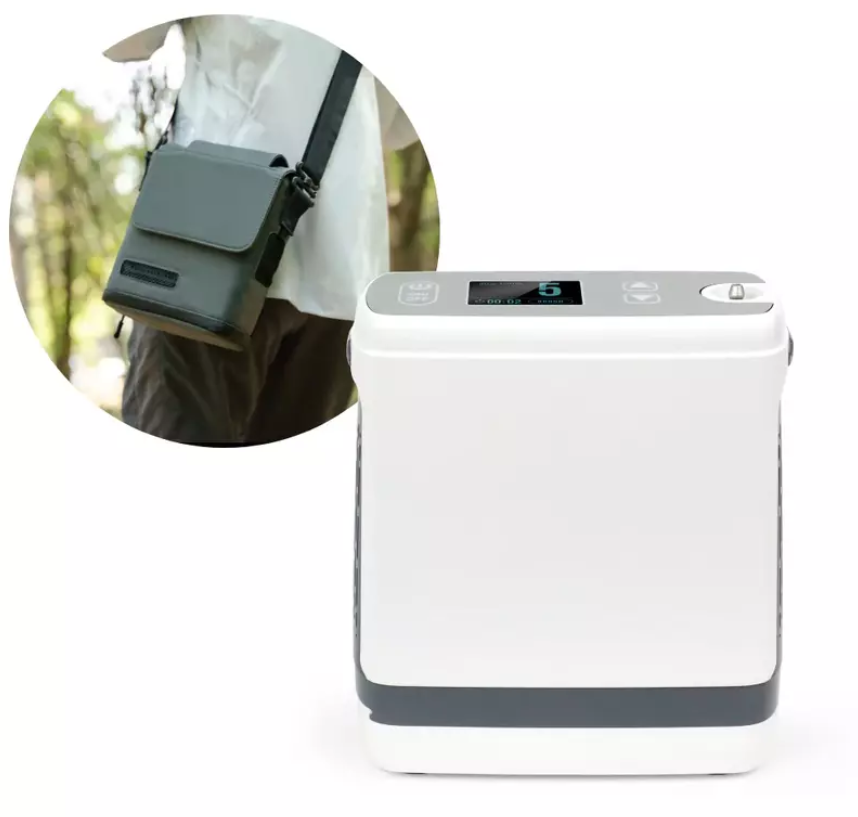
If oxygen therapy is prescribed, the next step is acquiring the device and setting it up at the prescribed flow level. The SG SG portable oxygen concentrator at 410 KWD provides ambulatory therapy in pulse-dose settings 1 through 5. Contact us via WhatsApp to order — we deliver free across Kuwait within 24 hours and provide setup support and training.